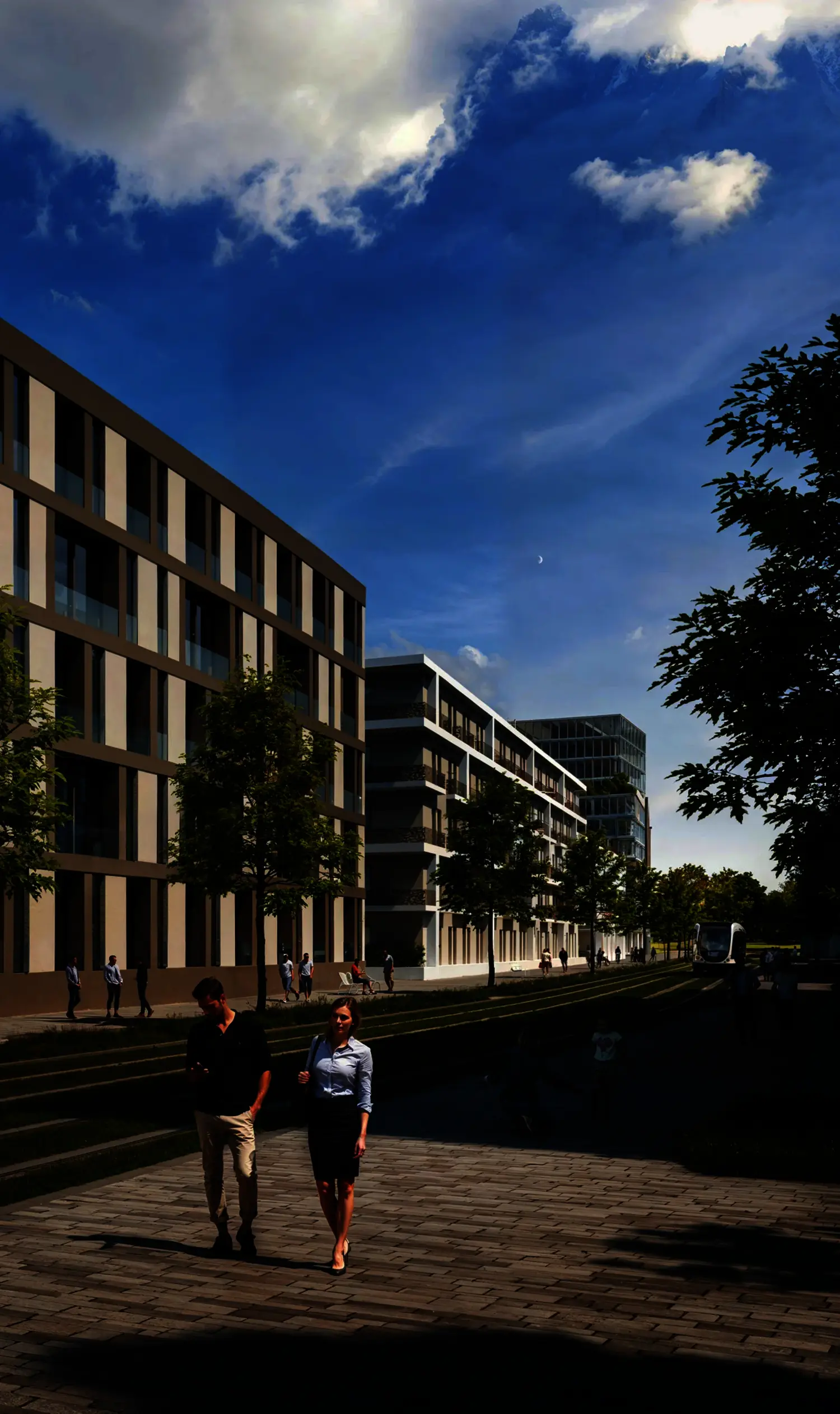
Nei Hollerich quater
Vivre, travailler, se divertir et se reposer en ville.
Nei Hollerich will transform circa 21 hectares adjacent to Luxembourg’s central station into a vibrant, mixed use quarter with approximately 390,000 m² gross above ground floor area. Anchored by principal owners Paul Wurth, Heintz van Landewyck and the Fonds de Compensation, the project reconnects dormant urban fabric and repositions Hollerich as a strategic hub for living, working, leisure and rest - just 300 m from Gare centrale and directly linked to the Tram.
Benefits for residents - At least 50% of built area is allocated to residential use, delivering diverse housing in a compact, walkable environment. The scheme prioritises high quality public and semi private green spaces, integrated courtyards and calm neighbourhood squares. The opening of Park Landewyck as the quarter’s green heart will provide unrestricted access to mature trees, water features and recreational space - significantly enhancing residential amenity, wellbeing and property values.
Benefits for businesses and visitors - Approximately 20,000 m² SCB is reserved for retail and restaurants, complemented by concentrated office and service space concentrated on the places of tht project. The new Triangle Square and a strong address identity will attract employees and clients, while direct tram and rail proximity, improved pedestrian and cycle links, and a new western city access increase customer catchment and operational convenience.
Mobility and urban integration - Nei Hollerich promotes sustainable mobility: an extended tram route through a boulevard style traffic-calmed street, generous pedestrian and cycle paths, and a southern allée acting as a green buffer to rail infrastructure. The design reduces internal car traffic, improves multimodal connectivity and connects seamlessly with adjacent development plans.
Urban quality and sustainability - The project balances strong urban density with ecological quality - green buffers, semi public courtyards, small plazas and a continuous green spine create a resilient urban ecosystem. New buildings will sympathetically integrate with listed industrial heritage, preserving visual identity while delivering an innovative, sustainable neighbourhood attractive to both residents and companies.